The Cherry Theory

The Cherry Theory transforms the Spanish pavilion at the Frankfurt Book Fair 2022 in a ecosystem of living words.

Inspired by the homonymous text of Carmen Martín Gaite, the space works like an expanded dictionary, a architectural hypertext where language, artificial intelligence and emotion intertwine.

Architecture, literature and technology merge in a sensorial journey that turns every corner into a Invitation to read, listen, imagine and debate the present and future of publishing culture.

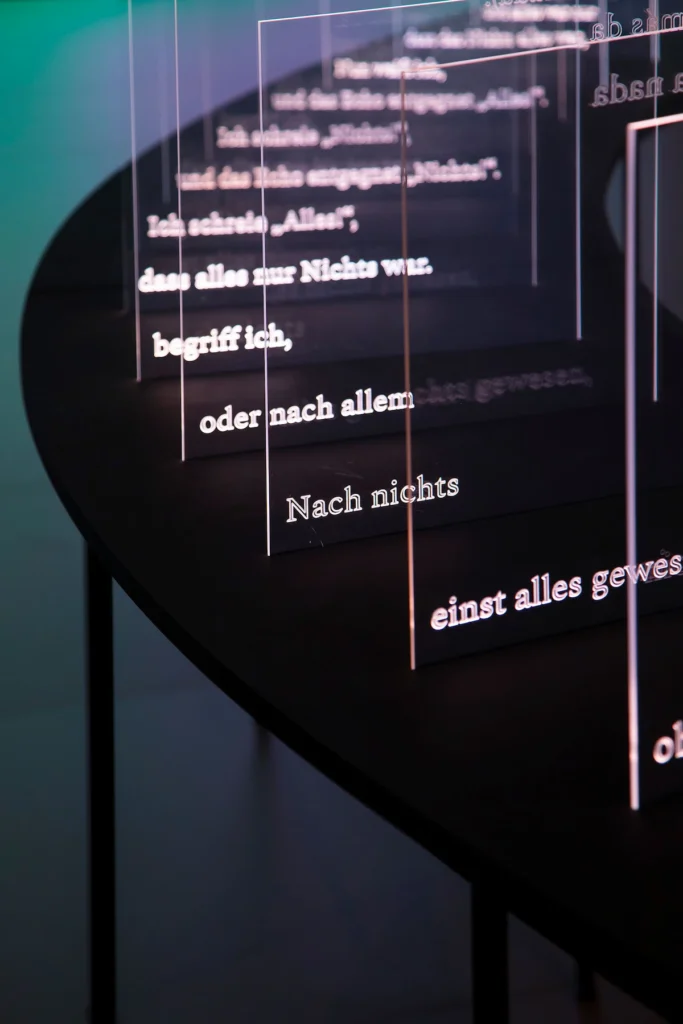
Detalle de palabras de metacrilato iluminadas en el pabellón español, Teoría de las Cerezas.
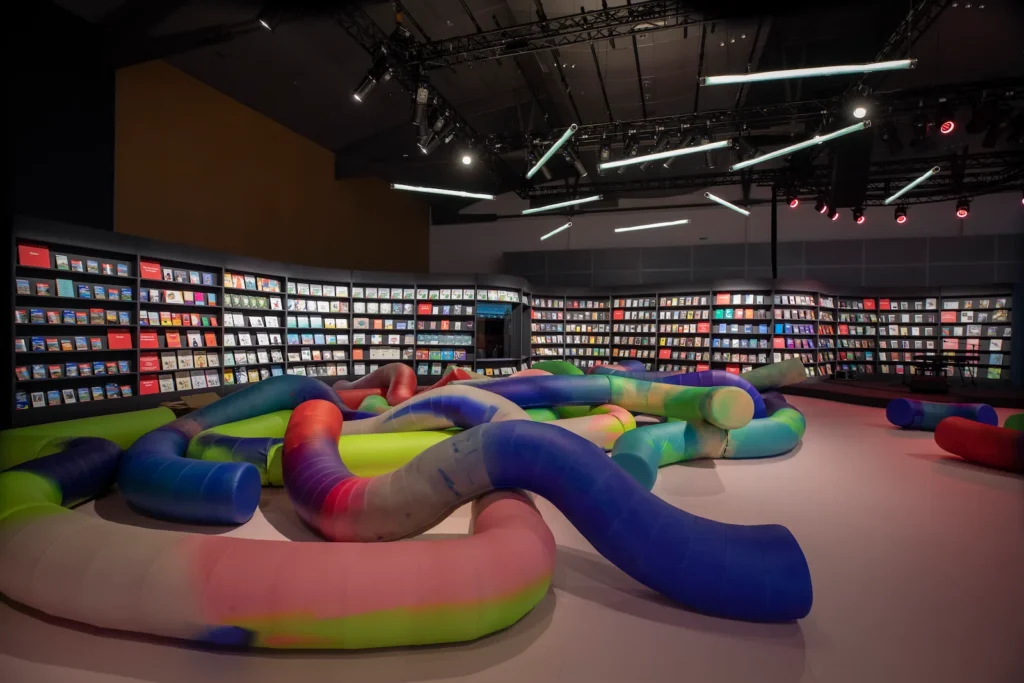
Vista general de la zona de lectura con estantería ondulada y sofá Boa
Vista del cartel de fachada del edificio-instalación del pabellón español en Frankfurt
Vista general de mostradores en el acceso principal del pabellón español
Diagrama de elementos espaciales y nombres, instalación Teoría de las Cerezas 2020

"Cherry Theory turns architecture into a living language"

Strategy

The project strategy lies in make the word habitable, turning it into matter, space and interaction.

Instead of building a conventional pavilion, a spatial language is built where The visitor is not a spectator but an active part of a collective story.

Three intertwined cherries organize the immersive experience, accompanied by interactive devices that explore the relationship between literature, body, and technology.

The pavilion is articulated as a great cultural device, where the sensorial, the discursive and the technological are intertwined in a narrative that questions and celebrates linguistic diversity, the role of women in culture and the challenges of editorial sustainability.

Vista axonométrica de la instalación Teoría de las Cerezas en Frankfurt 2020
Señalética del auditorio secundario en el pabellón Teoría de las Cerezas

Impact

The pavilion had a resounding impact as a cultural projection platform international for Spanish literature and as a public experience of narrative design.

More than 200 agents from the sector participated in a space that, rather than exhibiting, provoked dialogue, listening and exploration.

The interaction with artificial intelligence, the incorporation of all co-official languages and the activation of debates on sustainability and equality, positioned the project as reference in cultural design.

Its capacity to making the intangible tangible—thought, language, emotion— It was key to the visitor experience and to Spain's institutional projection at this global event.

Ponentes hablando al público sobre el escenario del auditorio, Feria de Frankfurt 2020

"Each device in the pavilion is activated when written, read, or listened to by the user, creating its own collective narrative."

Zona de lectura con sofá Boa y personas interactuando, pabellón español Frankfurt
Detalle de cortinas impresas con páginas de libros en la zona de cerezas, Feria del Libro Frankfurt 2020
Detalle de carta escrita automáticamente, instalación de impresión en vivo en Frankfurt 2020

year of construction

2022

total built volume

(adaptable to space)

total built area

2,000 m² 

customer

Spanish Cultural Action (AC/E)

Ministry of Culture and Sport

location

International Book Fair,

Frankfurt (Germany)

situation

Finalized

typology

Ephemeral

Corporate

Sustainable

Culture

Innovation

disciplines

Ephemeral Architecture

Pavilions & Exhibitions

Experiential design

Strategic Retail

Specialized consulting

impacts

Differentiating Concept

Brand prestige

Lower environmental impact

Precision and innovation

Constructive excellence

Explore more projects